How to Compare Aesthetic Equipment Quotations: A Configuration Checklist
Compare exact models, included items, power definitions, software and delivery terms before comparing equipment prices. A practical factory-sales procurement checklist.
A useful equipment quotation should explain what you will receive, which conditions apply and what still needs confirmation. A photograph and a headline price rarely answer all of those questions.
Before comparing suppliers, build one checklist and use it consistently. The aim is to compare the same model, configuration, quantity and commercial terms. This helps prevent a lower total for a smaller package from being mistaken for an equivalent offer.
Start with the exact model
Record the complete product name, model and suffix. Keep this identifier consistent across the quotation, configuration sheet, equipment identification and relevant manual.
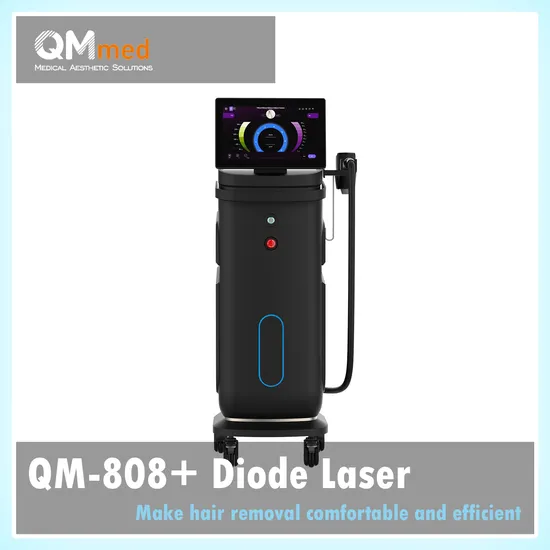
For example, QM-808A and QM-808+ should have separate configuration records. Likewise, QM-X3 must not be treated as QM-X3 Pro. Similar photographs or related names do not establish identical components, software or performance.
If a document uses a different identifier, ask the supplier to explain the relationship in writing. Until that is clarified, mark the item as unresolved. Do not fill a gap with a specification taken from a related model.
Separate included items from options
Ask for an itemised list of the supplied package. Depending on the equipment, that list may need to identify handpieces, accessories, cables, software, consumables and other order-specific items.
For each item, record whether it is included, optional, replaceable or required separately. Where consumables or replacement parts are relevant, ask how they are identified and ordered. An accessory shown in a photograph should not automatically be treated as part of the quoted package.
If the quotation mentions power, request a definition of each figure and the configuration it describes. Do not assume that input power, source output and other power-related descriptions are interchangeable. A meaningful comparison requires the same definitions and applicable documentation.
Check the actual software version
For equipment with software, request a walkthrough of the version that will be supplied. Ask which interface languages, imaging modes, report functions, data-storage arrangements and export options are included.
These are questions to verify, not features to assume. A screenshot from another model or software release may not describe the order being considered. Keep a record of the version shown in the demonstration and match it to the written configuration.
For QM-X3 enquiries, the model and software version should be checked together. A procurement walkthrough should not be interpreted as evidence of medical diagnostic capability.
Match documents to the order and destination
Tell the supplier your destination country and intended use early. Request the documents available for the exact model and configuration, and check their scope, issuing entity and applicability.
A document’s existence does not establish that it covers every model or satisfies every destination’s requirements. Buyers should confirm applicable requirements with qualified local specialists before ordering. Private-label work, demonstration units or descriptions such as “beauty equipment” do not remove that need.
Keep unresolved document questions visible in the comparison sheet. Avoid treating a general certificate image or a statement about an entire product range as a substitute for model-specific review.
Put commercial conditions in writing
The same device name can appear in offers with different quantities, accessories, private-label work or delivery terms. Record these conditions before comparing the totals.
Ask the supplier to specify the quotation date and validity, currency, quantity, included and optional items, private-label scope, payment terms, delivery arrangements and the costs included or excluded. Lead time and warranty coverage should be confirmed for the actual order, including the components covered, exclusions and repair or transport arrangements.
Do not assume that a private-label enquiry includes every possible logo, software, packaging or translation change. Define the requested work and ask which costs apply.
Clarify training and support
Ask what training will actually be provided: format, language, materials, equipment version and scope. Training on equipment does not replace operator qualifications or local requirements that apply to the intended use.
At ZENLASE, standard equipment training is free, and after-sales support uses the same factory system. The specific training arrangements, warranty scope and any additional work should still be confirmed for the order.
ZENLASE is our factory’s international sales team. For the same model, configuration, quantity and commercial terms, the same factory price applies without an additional ZENLASE brand premium. This is a like-for-like pricing principle; it is not a claim that every quotation, option or destination will have the same total cost. The applicable QM legal and contracting entity is identified in the relevant business and order documentation.
Compare the offer line by line
| Item | Ask the supplier to record | Why it matters |
|---|---|---|
| Device identity | Complete model, suffix and configuration version | Similar names do not establish the same package |
| Handpieces and accessories | Included quantity, options and compatible replacement identifiers | A catalogue photograph may include optional items |
| Power descriptions | Electrical input, power-supply and laser-output definitions separately | Different quantities should not be compared as one figure |
| Software | Supplied version, languages and report or export functions where applicable | A demonstration from another release is not order evidence |
| Order costs | Device, branding, packing, freight and tax responsibilities | Compare totals on the same delivery basis |
| Support | Training format, warranty scope, parts and repair transport | Define responsibilities before payment |
A copyable enquiry checklist
Use these fields to prepare a focused request:
- Exact product name, model and suffix.
- Destination country and intended equipment use.
- Your business role and requested quantity.
- Required configuration, handpieces and accessories.
- Software version, language and data-handling questions, if relevant.
- Private-label requirements, with each requested change listed separately.
- Documents needed for local review.
- Delivery, payment, training, warranty and support questions.
You do not need to send patient records to start a procurement discussion. Begin with the business and configuration information necessary to identify the order.
A clear quotation does not remove every purchasing uncertainty. It makes the remaining questions visible so that both sides can resolve them before payment. If you are evaluating a ZENLASE configuration, use our buyer enquiry page to start with the exact model and destination.
For a model-specific shortlist, see our diode laser procurement guide. To explore your own cost assumptions, use the business planning calculator; its scenarios do not guarantee demand or profit.
ZENLASE procurement checklist · Updated 18 October 2026. Configuration and commercial terms are confirmed for the actual order.